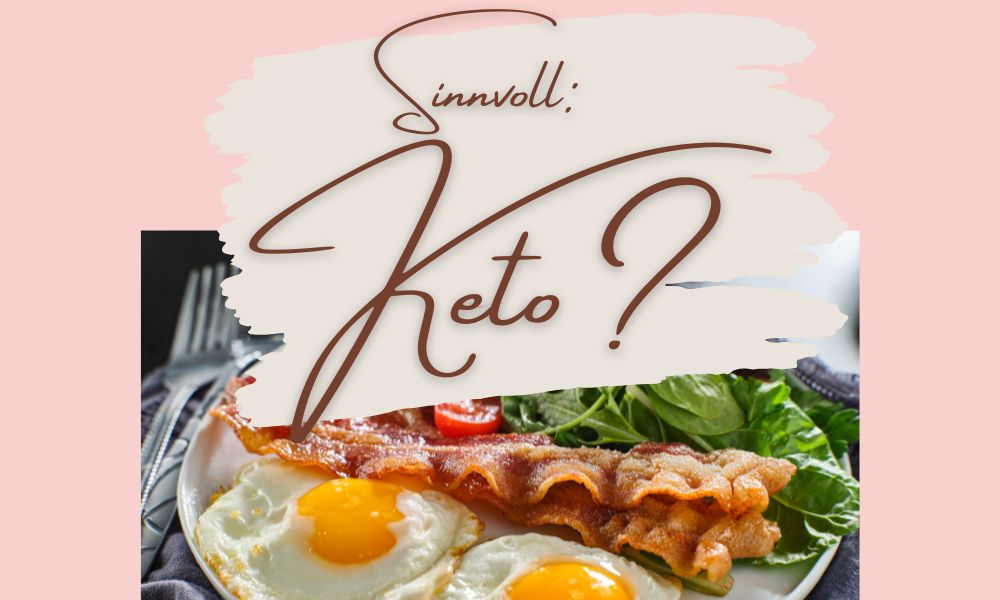
This is what happens when your body no longer receives sugar – and still needs energy?
Imagine your body is a well-equipped hybrid car. Normally, it runs on glucose – the sugar you get from bread, pasta, or fruit. But what happens when the sugar isn’t available? That’s where the ketogenic diet comes in, and your body cleverly switches to “fat fuel.”
The ketogenic diet means you eat almost no carbohydrates; often less than 30 grams per day. That’s not even a small slice of bread. Instead, the menu focuses on fat and protein – plenty of healthy fats , such as those found in avocados, nuts, eggs, or olive oil, and a moderate amount of protein .
If you do this, your body will switch to “ ketosis ” within a few days. During this process, your liver converts fat into so-called ketone bodies . These small molecules are veritable powerhouses of energy: they reliably supply your brain, heart, and muscles with energy. And all this happens without any sugar.
Many people report feeling more alert, mentally clear, and emotionally stable while in ketosis . Inflammation levels often decrease, and the mitochondria – your cell’s powerhouses – also function more efficiently .
But does this also apply to people with HPU?
Ketosis meets HPU
If you have HPU, your metabolism is unique. Your detoxification process is sensitive , your need for micronutrients is high , and your body reacts more strongly to stress . Therefore, a closer look at the ketogenic diet is worthwhile in your case.
What can have a positive effect?
-
Your blood sugar remains stable – this protects you from cravings and drops in performance.
-
Less inflammation in the body means less sensory overload, pain, or depressive moods.
-
Ketone bodies can help your brain function more clearly – especially if you suffer from “ brain fog ”.
-
And: If you pay attention to low-histamine foods, your histamine levels could also improve .
But beware – there are also negative aspects:
-
Increased fat burning can lead to your body producing more so-called free radicals . These oxidative substances need to be neutralized – and this is precisely where many people with HPU have a problem. This is because oxidative stress is usually very high in people with HPU anyway .
-
You lose many important minerals through your urine – including magnesium, zinc and B vitamins, which are difficult to store anyway with HPU.
-
Fat burning releases stored toxins – and if your detoxification via liver, intestines and kidneys is not working optimally, this can lead to new problems.
-
Your adrenal glands (which regulate your stress hormones) might also initially struggle to cope with the sudden switch to ketosis. This often results in exhaustion .
My advice for you
In the short term , for example for 2 to 8 weeks, a ketogenic diet can be beneficial for HPU under certain conditions . This is especially true if you use it to reduce inflammation or stabilize your energy levels.
But please be sure to pay attention to the following:
-
Supplement with targeted antioxidants, preferably in a highly bioavailable form (e.g. Vitamin C – PureWay C®, , to counteract increased oxidative stress.
-
Support your detoxification: Zeobent, Taurin or herbal aids such as Mariendistel (depending on tolerance).
-
Observe your body closely: sleep, mood, energy and skin can give you clues as to how well you are coping with the change.
In the long term , meaning over many months or years, the ketogenic diet is only recommended if your nutrient levels are truly stable and your metabolism is functioning well. For many people with HPU, a moderate, low-inflammatory diet (free of cow’s milk, gluten, sugar, alcohol, processed foods, and caffeine) is more tolerable and sustainable.
Your body will show you the way
The ketogenic diet isn’t a cure-all, but it’s a fascinating tool – if you use it correctly. For people with HPU, it can be helpful in the short term to relieve stress on the body and gain new energy.
In the long run, however, it requires sensitivity, close monitoring of lab results, and above all, mindfulness of your own personal journey.