
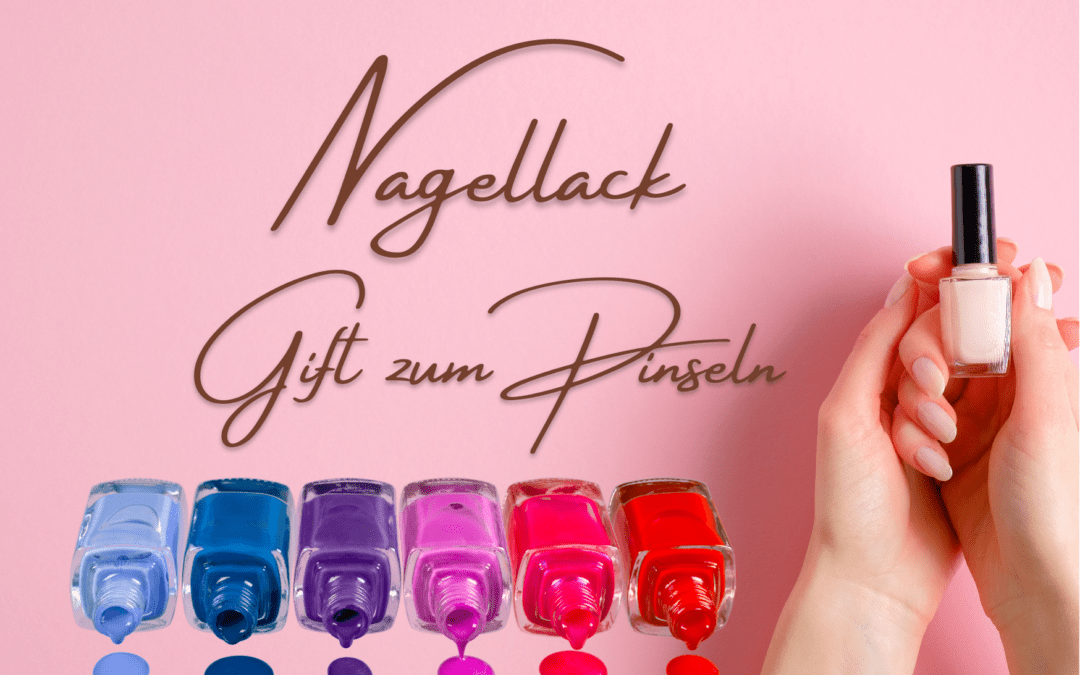
Did you know what kind of toxins are in nail polish?
Colorful nails are practically a standard part of a woman’s wardrobe. We at the HPUandYou team love them too. However, the ingredients in conventional nail polishes are often problematic for people with HPU. While EU cosmetic regulations specify the maximum permissible concentration of these toxins in nail polishes, many of these substances are suspected of being carcinogenic. The permitted concentration levels in these polishes are also often critical.
Toxins diffuse through the cuticles
Our cuticles are capable of absorbing toxins and transporting them into the bloodstream. For people with HPU (hemopyrroluria), even these small amounts can be enough to trigger physical symptoms such as headaches and stomach aches. The impaired detoxification capacity of individuals with HPU can mean that microdoses ingested from nail polishes cannot be adequately broken down and can accumulate in organs or the central nervous system.
No nail polish is free of questionable substances.
A few weeks ago, we responded to a request from someone with HPU and examined nail polishes from many different manufacturers for you. We wanted to find a polish that looked good, provided good coverage, and didn’t contain any questionable substances – an impossible task, as we unfortunately discovered.
We thoroughly checked all the nail polishes for their ingredients. We used the apps ToxFox, Codecheck, and Hautschutzengel for this purpose. This makes it possible to get an overview of potentially harmful ingredients, even without a chemistry degree.
First things first: We didn’t find a single nail polish that received a green light from all 3 apps.
These are the substances we found most frequently:
- formaldehyde
This preservative is primarily used in nail-hardening products. The American Environmental Protection Agency (EPA) classifies this substance as “probably carcinogenic.” Prolonged inhalation of formaldehyde is even said to cause cancer in the nasal and pharyngeal cavities. Consequently, intolerances or allergic reactions to this ingredient can also occur when applied to the face or neck.
- Camphor
Camphor is a plasticizer used to keep the paint layer elastic. However, this colorless powder can be toxic and psychoactive above a certain concentration. Eco-friendly paints generally do without camphor.
- Triphenyl phosphate
The hormonally active substance triphenyl phosphate is primarily added to nail polishes to make them last longer. It is also supposed to make the nails flexible and supple after application. However, studies show that triphenyl phosphate, as a hormonally active substance, can lead to infertility in animals and weight gain in humans.
- Acrylates
The mixture of water and paint is inhaled during application. People in the same room at the time also come into contact with this group of acrylics. This can have negative health consequences, especially for children. Acrylates in general can cause irritation of the skin and mucous membranes.
- Phthalates
Phthalates are plasticizers used to prevent nail polish from chipping. These substances may still be used as carriers or additives, provided they are removed from the final product. However, microdoses of phthalates may still be present in amounts considered “harmless” to health.
- toluene
Within the EU, the solvent toluene, which gives nails their shine after polishing, is no longer permitted. However, if you choose a product manufactured abroad, there’s a good chance that toluene will be listed among the ingredients.
Toluene can be harmful to reproduction and the fetus, and in larger quantities can cause damage to the detoxification organs liver and kidneys.
Are there actually any nail polishes that are not harmful to health?
Things are changing in the cosmetics industry. Many manufacturers are trying to distance themselves from synthetically produced ingredients in their nail polishes and are instead opting for natural ingredients that have no harmful effects on health.
The so-called “free” declaration reveals how “clean” the nail polish really is. “3-free” polishes are free of phthalates, formaldehyde, and toluene. “4-free” and “5-free” polishes are generally also free of camphor, formaldehyde resins, and rosin. “7-free” polishes are additionally cruelty-free and vegan.
When buying nail polish, you should at least look for the “Free” label. Also, keep in mind that while nail polishes from natural cosmetics manufacturers are significantly better than conventional products, they are not entirely free of harmful additives.
My personal conclusion:
Logically, the dose makes the poison here too. If I occasionally opt for a less harmful “free” nail polish, my body will cope with it better than if I apply a highly contaminated polish daily. Whether nail polish is necessary at all is something every woman has to decide for herself.