
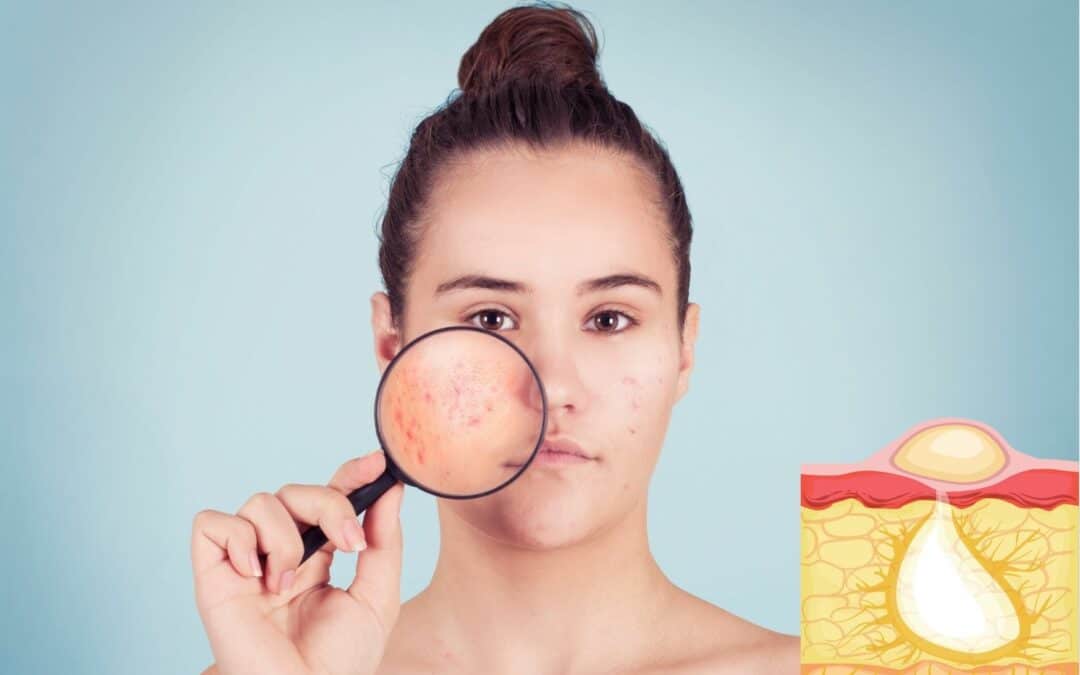
Pimples and acne in HPU
Our skin, along with the liver, intestines, and kidneys, is another important excretory organ. Because we HPU sufferers can’t always optimally eliminate metabolic waste products and toxins through other organs, the body often uses the skin as a last resort to rid itself of harmful substances. We must therefore remember that the skin isn’t the cause, but merely a messenger, indicating that things aren’t quite so rosy inside our bodies.
How does a pimple actually form?
Our face is covered with many tiny pores, all of which have one thing in common: the glands that produce sebum. The sebum is transported through the hair follicle in the pore to the outside, creating a thin (protective) film on the epidermis. This process serves to protect against environmental influences and to prevent the skin from drying out. When pimples and pustules occur, this is no longer a “normal” function of sebum production.
In the case of acne, the hair follicles become clogged because the sebaceous glands are receptors for male hormones. If there are too many male hormones in our body that can no longer be bound to receptors elsewhere, they seek out the sebaceous glands as their binding site. This manipulates the control center of the cell nucleus in the skin, resulting in the production of more sebum than necessary. Consequently, the hair follicle becomes clogged, and the dead cells cannot reach the surface. The increased sebum production creates ever-increasing pressure in the hair follicle, which ideally leads to the blackhead bursting. However, if the blackhead doesn’t burst, the inside of the hair follicle becomes a breeding ground for skin bacteria. This can lead to bumps, inflamed pimples, or acne.
There are numerous factors that can contribute to the development of acne. Proper nutrition, hormonal balance, and stress levels all play a crucial role in the outbreak of pimples and pustules.
- Nutrition
Our mitochondria, the powerhouses of our cells, require energy carriers in the form of carbohydrates, fats and proteins for energy production.
People with HPU often have a deficiency in B vitamins and other minerals (such as magnesium), which prevents macronutrients from being transported into the cells. If, in addition, the cells lack oxygen, heme, iron, copper, and coenzyme Q10, they cannot function properly, and the body is not adequately supplied with energy. Consequently, the metabolism slows down, and detoxification is impaired. If HPU sufferers further burden their bodies with an unhealthy diet high in carbohydrates that cause rapid blood sugar spikes, saturated fats, and trans fats, skin problems are a frequent consequence.
- Hormone overproduction
Hormonal imbalances particularly affect women who have HPU in combination with micronutrient deficiencies, adrenal insufficiency, and hypothyroidism. When the body’s endocrine glands are weakened, they are no longer able to produce hormones in the required amounts.
It is usually the male hormones (especially testosterone) that lead to breakouts in women. There is therefore a close connection between testosterone and sebum production in the skin. The adrenal glands produce the largest share of testosterone, but the ovaries also contribute a small amount. Testosterone is found in the body in both free and bound forms. Only free testosterone is relevant to the skin. Via the 5-alpha reductase enzyme, free testosterone is converted into dihydrotestosterone (DHT), which promotes increased sebum secretion.
Our hormonal balance in the body is also influenced by blood sugar levels. If these rise sharply and this happens several times a day, a large amount of insulin is released into the bloodstream, which in turn increases androgen production (male hormone production). Therefore, if you want to get your skin problems under control, you should, among other things, make sure to keep your blood sugar levels stable.
Nutrient deficiencies also contribute to hormonal imbalances. When the body lacks essential minerals, vitamins, or trace elements, the skin suffers because it isn’t supplied with the necessary substances. Taking medication (especially the birth control pill) also affects organs like the liver and intestines, limiting their ability to store and utilize minerals. Additionally, the detoxification capacity of the liver and intestines is impaired by the breakdown of medications, forcing other detoxification organs, such as the skin, to compensate. This can lead to breakouts.
- Stress and cortisol:
Consuming too many carbohydrates forces the pancreas to produce more insulin so that sugar from food can be transported from the blood into the cells. Whenever insulin production is disrupted, it also affects other hormones, most notably the stress hormone cortisol, which rises every time insulin levels increase. While cortisol provides a temporary energy boost, in the long run it promotes inflammation and thus stimulates sebum production. The inflammatory substances caused by cortisol attack the natural collagen in the skin, making it looser, more vulnerable, and drier. Furthermore, the release of cortisol puts the body into a state of emergency. This hormonal surge can prevent ovulation. Without ovulation, no progesterone is produced, which also leads to hormonal imbalance.
Inflammation in the body:
It’s not just our skin that can be affected by inflammation. Many inflammatory processes occur “secretly” in the body, and we don’t even notice them. They can spread unnoticed and severely impair our health. Regardless of the location of the inflammation (external or internal), it can irritate tissue and damage cells. With acne, a primary focus should be on allergens. In particular, food intolerances to certain foods cause “silent inflammation.” Traditional Chinese Medicine uses the so-called skin mapping method. This allows one to identify, based on the location of acne, which area of the body needs support and where a silent inflammation may be present.
Therapy:
To get acne under control, a holistic approach is important. Firstly, taking basic HPU therapies (zinc, manganese, vitamin B6) helps to improve metabolic processes in the body, thus optimizing detoxification via the kidneys, intestines, and liver. Secondly, one should also support the body’s regeneration through an adapted lifestyle.
There are a variety of holistic approaches to treating acne:
- Intestinal regeneration with accompanying restoration of the digestive system
- Restoring hormonal balance through proper nutrition and micronutrient intake
- Practicing relaxation techniques (e.g. yoga, meditation)
- Anti-inflammatory, alkaline-rich diet
- Avoid foods that cause a sharp and rapid rise in blood sugar levels (especially sugar or isolated carbohydrates).
- Drink 2-3 liters of pure water per day (as this promotes the elimination of waste products via the kidneys and intestines)
- Relief for the skin through alkaline baths
- Use of a gentle skincare product (free from fragrances, alcohols and surfactants) that does not further damage the skin microbiome.
- Optimize detoxification (zum Webinar)
In addition to taking basic HPU treatments (zinc, manganese, and vitamin B6), you can support your body with vitamin A and chromium. Vitamin A counteracts sebum production and thus prevents clogged sebaceous glands in the skin. Chromium can be very beneficial if you suffer from insulin resistance. It regulates blood sugar levels by increasing the effectiveness of insulin.
We should always keep in mind that skin problems originate within the body. Our skin essentially reflects imbalances within the body. Therefore, focusing solely on external measures will not lead to lasting success.
Just as HPU therapy can take time to fully take effect, we should also be patient when healing acne. Our body is always doing its best, and we should acknowledge that.